
What to Do When Pipes Freeze in Texas
The Austin area ran through more than one hard freeze in January 2026, and Winter Storm Uri in February 2021 is still the event Austin Water points to when it warns customers to get ready for winter. Our homes here are built for August, not January. Supply lines run through uninsulated attics, along exterior walls, and out to hose bibs with nothing between them and the cold air. When pipes freeze during a Texas cold snap, those lines give first. What you do in the first hour is the difference between a wet cabinet and a flooded living room.
Why Pipes Freeze and Burst
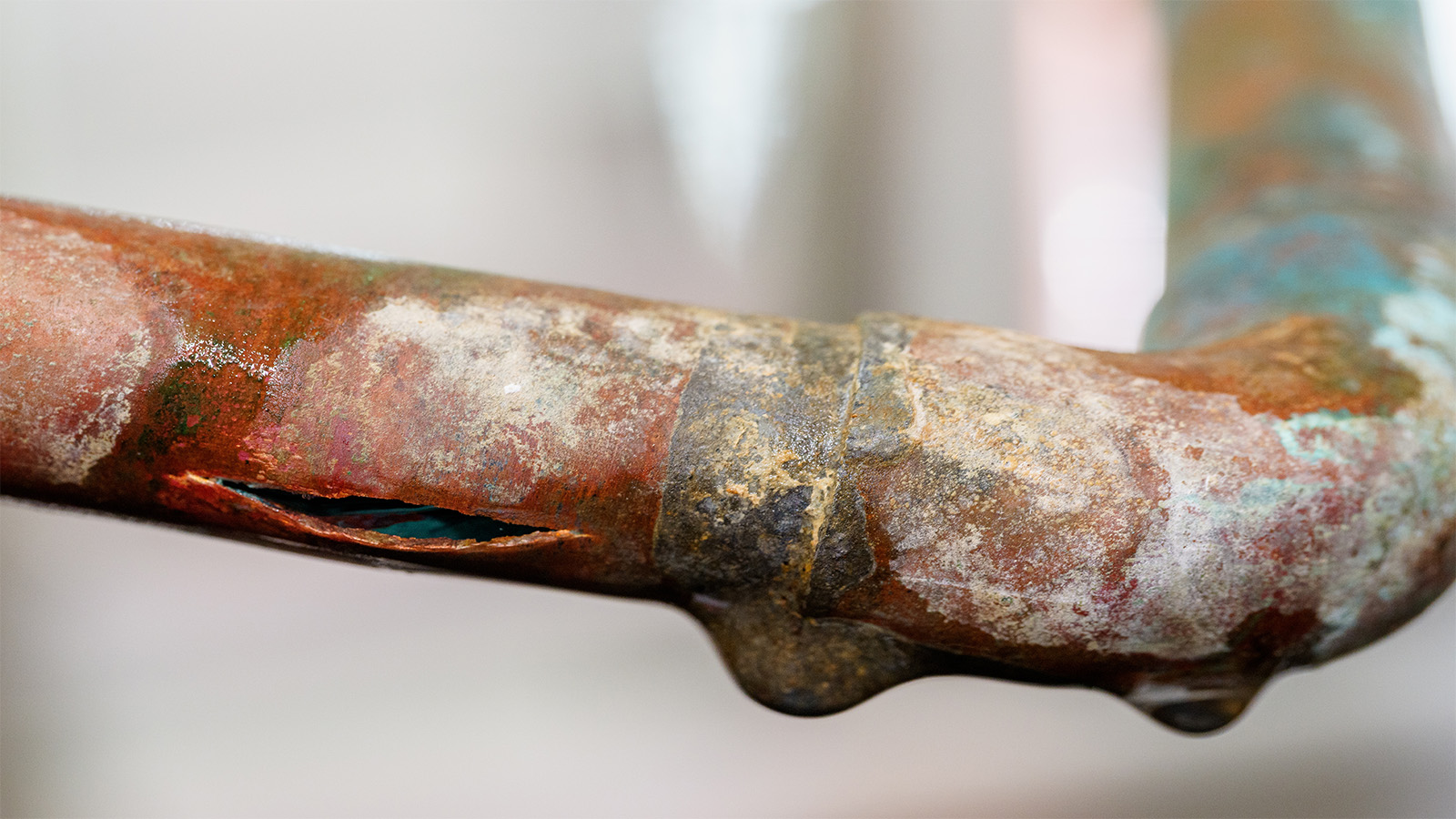
Most people assume ice splits the line where it forms. It usually does not. Once ice closes off a section of pipe, the water on the other side has nowhere to go, and pressure builds between the ice and the closed faucet at the end. The pipe bursts wherever it is weakest, often at a point with no ice in it at all. That is why pipes burst several feet from where the freeze started, and why a dripping faucet helps. The drip doesn’t keep the water warm. It is giving that pressure somewhere to escape.
Field research at the University of Illinois set the alert threshold at 20 degrees for uninsulated pipes in unheated spaces. Keep in mind, though, lines can still freeze above that mark when wind is pushing cold air through a gap in an exterior wall or an open attic vent.
What to Do the Moment Pipes Freeze
A trickle of water, or nothing at all, is usually the first sign. As soon as you notice a potential issue, work through these steps in order.
- Go to your shutoff valve. For most Austin-area homes, the property owner’s shutoff is on your side of the water meter, at the meter box. Renters should call their property manager.
- Shut the water off at the valve. Doing this first limits flooding if a line has already split somewhere you cannot see.
- Open a faucet near the frozen section. This relieves pressure and lets steam escape if you apply heat.
- Leave cabinet doors open. Warm room air reaching the pipes under sinks on exterior walls helps and costs nothing.
If a Pipe Has Already Burst
If water is near outlets or fixtures, turn off power at the breaker only if you can reach the panel without standing in water. If water is near the panel itself, stay clear and call an electrician or your electric utility. Open faucets to drain what is left in the system. Photograph and video everything before cleanup starts, because your insurer will want the damage documented in its original state. Then call a licensed plumber.
Not sure where the water is coming from?
That is exactly what we do. Request a free quote from Accurate Leak and Line, and we will locate it without tearing up your property.
Thawing a Frozen Pipe Without Making It Worse
For an exposed line you can reach, Austin Water recommends gentle heat: a hair dryer, an electric heating pad, or warm towels. Start at the faucet end and work back toward the wall so melting water has a path out. Never use an open flame on a frozen pipe.
Keep in mind that a frozen pipe may already be cracked and can start leaking the moment it thaws. Keep electrical appliances away from standing water, and if the frozen section is behind a wall, under the slab, or anywhere you cannot see it, call a plumber instead of trying to thaw it yourself.
Once water is moving normally again, check that section for cracks and weeping joints. If you find one, shut the water back off at the valve.
The Freeze Damage You Cannot See
Not every freeze problem announces itself with water coming through the ceiling. Some show up weeks later.
Watch your next water bill. If usage jumps and you cannot find a running toilet or a dripping faucet to explain it, water is going somewhere. Other signs point the same direction: a patch of lawn that stays soggy in dry weather, water pressure that never came back to normal, a warm spot on a slab floor, or drains that started running slow after the freeze.
Underground and sub-slab lines are the hardest to rule out, because there is nothing to look at. Finding a leak there takes diagnostic equipment, not guesswork. Our team uses video camera inspection, hydrostatic pressure testing, static leak isolation testing, and electronic line tracing to pinpoint the location before anyone opens up a floor or a yard. When a repair is needed, trenchless plumbing and epoxy lining often let us repair the line with minimal digging.
How to Avoid Freezing Pipes Next Winter
Most of this takes an afternoon in November.
- Find your shutoff valve before you need it. Make sure everyone in the house knows where it is, and keep it clear of debris. If you can’t find it or it’s damaged, you may need to use the City shutoff in the meter box, which can take a water meter key. Most hardware stores sell them.
- Insulate pipes in attics, garages, and other unheated or drafty spaces.
- Disconnect garden hoses and cover outdoor faucets with foam covers or towels.
- Turn off and drain automatic sprinkler systems.
- Seal gaps in exterior walls and crawl spaces where cold air reaches plumbing, and keep garage doors closed through a freeze.
- If you think a line might freeze, let one cold-water faucet drip, the one farthest from your shutoff valve. A slow drip is enough.
- Leaving town? Austin Water recommends shutting off the water at the meter and setting the thermostat to 65 degrees or higher.
- Insulation and foam covers sell out the week a freeze warning posts. Buy them now.
Read more about how to prevent pipes from freezing!
Talk to Accurate Leak and Line
We have specialized in underground and sub-slab plumbing diagnostics in Texas since 2002, serving Austin, San Marcos, Fort Worth, and the rest of the state. If a freeze left you with a leak you cannot find, request a free quote, and we will track it down.