
What Is a Hydrostatic Plumbing Test
What the Test Actually Tells You
A hydrostatic plumbing test answers one question: is your sewer system still holding water? That question matters most in older houses, and around Austin, San Marcos, and New Braunfels, there are plenty of them. Homes built before 1980 typically have cast iron drain lines running beneath the slab. Cast iron corrodes from the inside out, tree roots work into the cracks that follow, and the leak stays hidden until a drain slows, a bill climbs, or a soggy patch turns up in the yard.
The test is a diagnostic step, not a repair. It establishes whether water is escaping your sewer lines somewhere between the house and the city connection, which is harder to pin down than it sounds. A clogged sink announces itself. A cracked line under a slab foundation does not.
What you get back is a clear yes or no on the integrity of the system, before anyone talks about opening a floor. That answer is what a hydrostatic plumbing test exists to produce, and it is the difference between a targeted repair and an expensive guess.
How Hydrostatic Pressure Testing Works
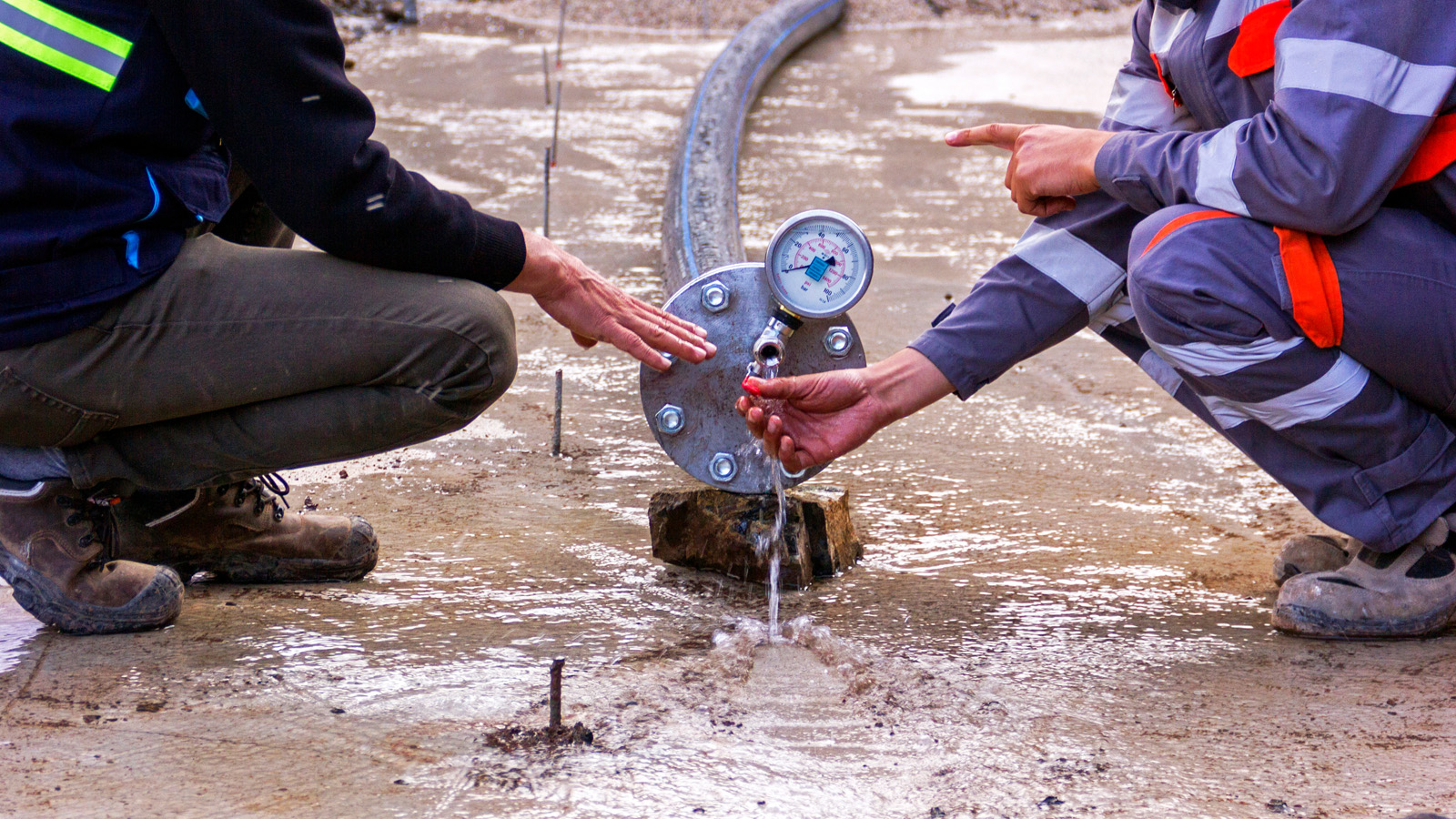
Hydrostatic pressure testing is straightforward. An inflatable test ball goes into the main sewer line and blocks it, sealing the system off. The lines are then filled with water up to foundation level, and the level is monitored from there.
If the water rises to the expected height and stays put, the system is holding. If it never reaches that height, or drops off quickly, there is a leak in the sewer line.
Tree roots are a common culprit. They follow moisture, and over the years they work into joints and hairline cracks until a pipe splits open. Because the test runs through existing access points, nothing gets excavated to find the problem. That is the point of non-invasive leak detection: confirm the issue first, then choose the least disruptive fix.
Signs You Might Need a Hydrostatic Plumbing Test
A few symptoms point fairly directly at your sewer lines and are worth acting on quickly:
- Slow drains throughout the house. One sluggish sink is usually a clog. Several at once often means something is wrong further down the line.
- Foul odors indoors or outside. Sewer gas escaping through a break has to go somewhere, and it frequently surfaces near the leak.
- Puddles or soggy patches in the yard. Standing water with no rain to explain it is a strong signal that an underground line has failed.
Other symptoms flag an underground leak without naming the culprit: sewer stoppages, a jump in water use, warm spots on the floor, sticking doors and windows, new wall cracks, or buckling flooring. Any of these can point to a slab or foundation leak, and slab leak detection often starts with the same toolkit.
Not sure which category your problem falls into? That is what a diagnostic visit is for.
Contact Accurate Leak and Line to request a free quote and schedule a hydrostatic plumbing test before a small leak turns into a large one!
Hydrostatic Testing vs. Other Leak Detection Methods
A hydrostatic plumbing test rarely works alone. It usually follows a video camera inspection, because the two answer different questions. The camera shows what a pipe looks like inside. The pressure test proves whether the system holds water.
Hydrostatic Testing vs. Video Camera Inspection:
| Hydrostatic Pressure Testing | Video Camera Inspection | |
|---|---|---|
| What it does | Fills the sewer system with water to foundation level and measures whether the level holds | Runs an infrared camera through sewers and drains to view the pipe interior |
| What it detects | Whether a leak exists anywhere in the sewer system | Leaks, obstructions, breaks, and deteriorated pipe, plus their location |
| When it is used | After a camera inspection flags a concern, to confirm the system is losing water | Typically the first step in the diagnostic process |
| Property disruption | None, performed through existing access points | None, performed through existing access points |
| Best for | Confirming a suspected leak and justifying repair | Seeing pipe condition and narrowing down where to look |
Our team also uses static leak isolation testing, electronic line tracing, and dedicated water leak detection equipment. Which combination makes sense depends on what the first round of testing turns up.
What Happens if the Test Finds a Leak
Finding the leak is the easy part. The repair is where the choices get made, and there is usually more than one path forward.
Our first move on most sewer and drain problems is epoxy pipe lining. A structural epoxy sleeve coats the inside of your existing pipe and cures into a pipe within a pipe, which lets older metal lines perform more like PVC. Nothing gets dug up.
When the damage is too far along for lining, trenchless pipe repair or a targeted trenchless sewer repair is next. We dig access holes outside the foundation and tunnel beneath it to reach the lines, then reroute where needed. Some digging happens, far less than a conventional job requires.
Traditional excavation still makes sense on badly deteriorated cast iron. When that is the right call, our OSHA-certified crew keeps the work area contained.
Hydrostatic Plumbing Test FAQs
If any of the signs above sound familiar, the sooner you know what is happening underground, the more repair options stay open to you. Accurate Leak and Line serves homeowners and businesses in Austin, San Marcos, New Braunfels, and the surrounding communities.
Reach out today to schedule your hydrostatic plumbing test and request a free quote.